
Section 1: Understanding Core Drilling Technology and Applications
Core drilling is a precision technique used to create perfectly cylindrical holes or extract samples from solid materials. Unlike traditional methods that can cause structural damage, core drilling provides a clean finish with minimal disturbance to the surrounding area.
Core Drilling vs. Standard Drilling: The Precision Difference
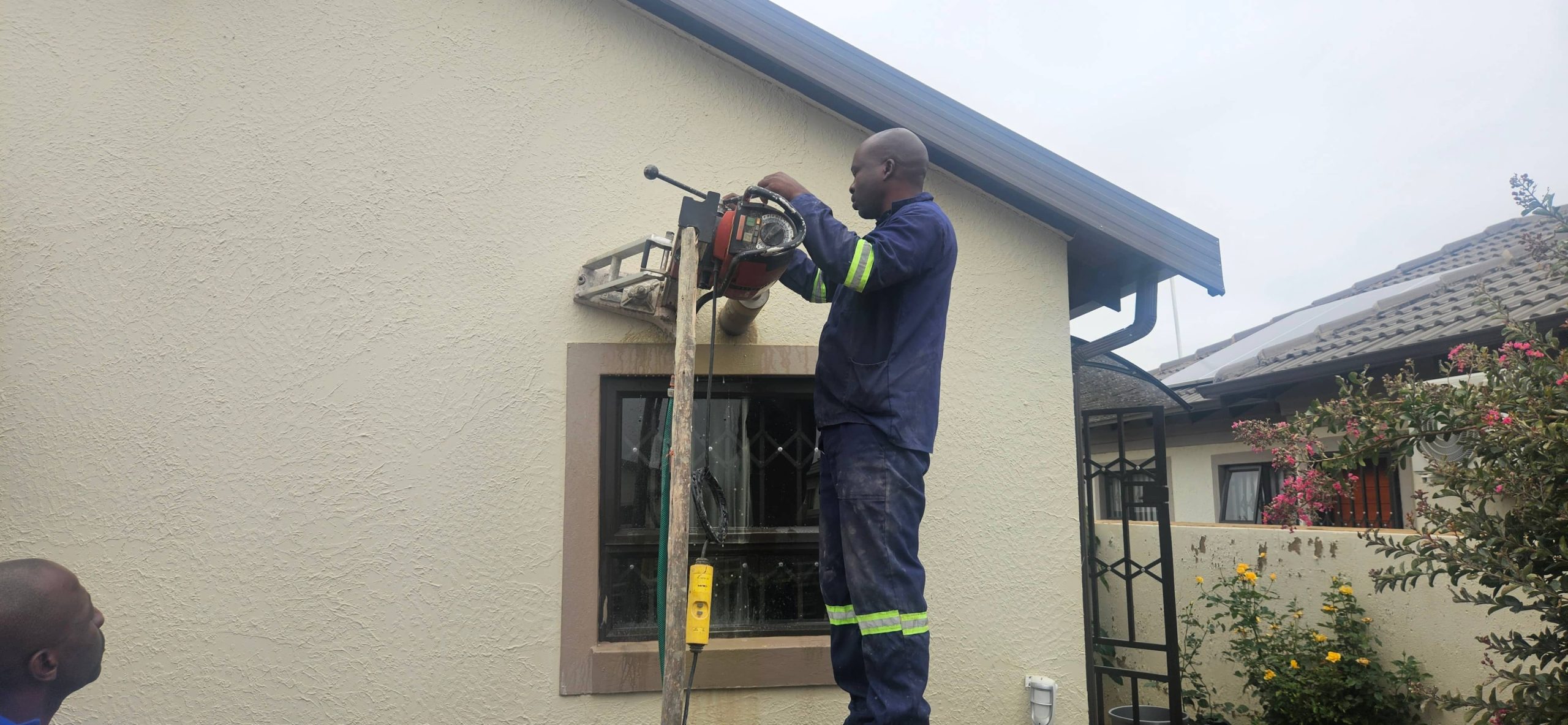
Core drilling utilizes a diamond-tipped bit to cut through dense materials like reinforced concrete, asphalt, and brick. Water is circulated to cool the bit and flush away debris, ensuring a smooth, unbroken finish.
Standard rotary drills or jackhammers rely on impact, which often results in cracking, jagged edges, and structural micro-fractures. Core drilling acts like a surgical tool—cutting exactly what is needed without compromising the integrity of the slab or wall. For professionals in concrete cutting Gauteng, this precision is essential to avoid costly remedial work.
Primary Applications in Gauteng Construction
In high-rise developments across Johannesburg and Pretoria, core drilling is essential for:
- Structural Testing: Extracting concrete samples to verify strength and density before adding new floors.
- Utility Installation: Creating clean penetrations for plumbing, electrical conduits, and HVAC systems without damaging the structural slab.
- Road and Infrastructure: Sampling asphalt and concrete on highways to ensure load-bearing capacity during upgrades.
- Anchoring: Providing precise holes for structural anchors in bridges, signage, and industrial machinery bases.
Material Capabilities: Concrete, Asphalt, and Brick
Modern construction in hubs like Ekurhuleni requires versatility. Core drilling excels across a variety of materials:
- Reinforced Concrete: Diamond bits slice through high-density concrete and steel rebar mesh effortlessly.
- Asphalt: Ideal for road maintenance, allowing for smooth utility trenches and core sampling for road quality checks.
- Brick and Masonry: Provides clean entry points for renovations in older buildings where preserving the surrounding masonry is critical.
Section 2: Selecting a Leading Professional Core Drilling Service
The quality of your core drilling depends entirely on the expertise of the team. In the competitive Gauteng market, selecting a service that understands local building codes and site requirements is vital.
Credentials and Compliance
Ensure your service provider adheres to the OHS Act. For large-scale renovations or commercial builds, verification of COIDA registration and specialized training for high-altitude or confined-space drilling is non-negotiable. Certifications from industry bodies (such as the Concrete Society) serve as a guarantee that the team follows best practices for high-pressure environments.
Equipment Fleet and Maintenance
A professional service should offer a range of equipment suited for different site requirements.
- Wet Drilling: Used for indoor or dust-sensitive environments to keep the site clean.
- Dry Drilling: Ideal for sites where water usage must be strictly limited.
- Electric vs. Hydraulic: Utilizing modern, low-noise electric rigs is a major advantage for projects in residential or busy office areas like Sandton or Midrand.
Portfolio and Local Experience
Review a provider’s history with projects across the Gauteng province. Local experience means they understand the specific challenges of Gauteng’s soil and construction materials, ensuring they can handle unexpected complications like hitting hidden rebar with ease.
Section 3: The Core Drilling Process
A professional approach ensures the project moves from quotation to completion with minimal disruption.
- Site Assessment: Experts scan the area to identify internal utilities, rebar, or cables to ensure a safe, precise cut.
- Execution: Using professional-grade rigs, the team drills with controlled vibration. This is vital for occupied buildings where noise and structural shaking must be kept to a minimum.
- Cleanup and Handover: Once the hole is cored, the slurry is managed, the site is cleaned, and samples (if required) are labeled and prepared for laboratory analysis.
Section 4: Safety and Environmental Responsibility
Safety is paramount in construction. Professional teams implement rigorous safety protocols, including the use of dust suppression, noise control, and proper waste management. By managing slurry and debris responsibly, professional core drilling services help maintain clean, compliant, and environmentally conscious job sites.
Conclusion: Securing Precision for Your Gauteng Project
Whether it is a commercial renovation in Johannesburg or a road upgrade in Pretoria, professional core drilling in Gauteng provides the accuracy and reliability that standard methods cannot match. By choosing a specialist focused on concrete, asphalt, and brickwork, you ensure your project is built on a foundation of precision and safety.
Invest in quality drilling to avoid mistakes and ensure your next build stands the test of time.